Explainer
Which sauna woods grow in America?
Western red cedar grows in the US and Canada, and most of it stands in British Columbia. Northern white cedar, basswood and aspen are Lake States and New England woods.
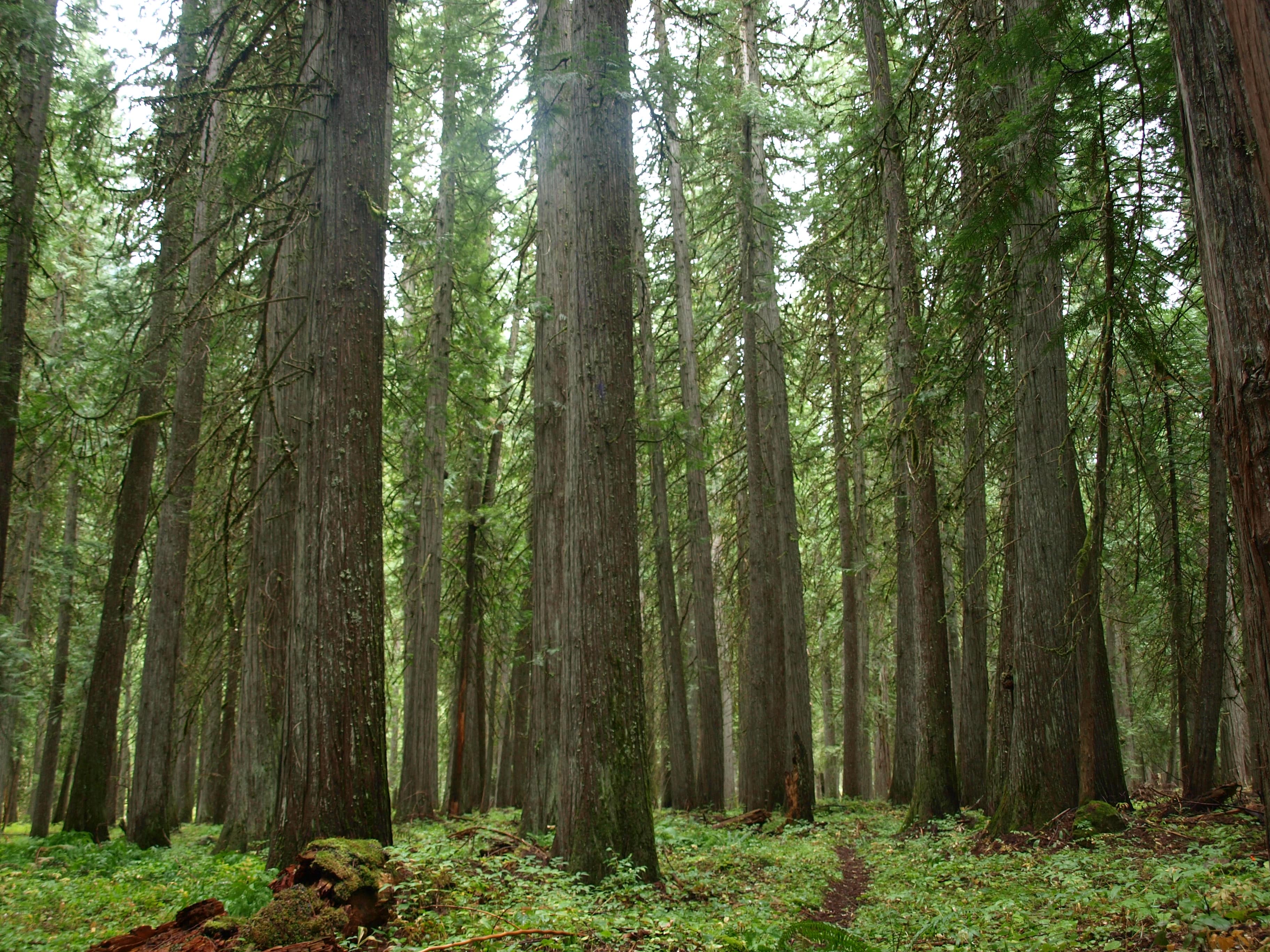
Western red cedar, the classic sauna wood, grows in the US and Canada, and most of the standing timber is in British Columbia, by the Forest Service's old estimate. Northern white cedar, basswood and aspen all grow across the Great Lakes states and New England, so a sauna can be all-American wood. Few of the makers we list say where their wood grew, which is why the origin box on each listing tells you when the source isn't stated. We read the USDA Forest Service's range maps and its Wood Handbook, which also explains why light woods make the comfortable benches.
Western red cedar crosses the northern border
Western red cedar runs along the Pacific coast from southeast Alaska through British Columbia and western Washington and Oregon into northern California, and inland into northern Idaho and western Montana, per the Forest Service's species review. It grows best on Washington's Olympic Peninsula.
Most of it stands north of the border. The Forest Service's Silvics of North America put the standing volume at 824 million cubic meters in British Columbia and 228 million in the US, about 78% Canadian by our math, though those estimates predate 1990. Natural Resources Canada says the species makes up nearly 20% of BC's coastal harvest. American red cedar lumber comes mostly from Washington, then Oregon, Idaho and Montana, per the Wood Handbook.
Northern white cedar is the Maine and Great Lakes cedar
Northern white cedar grows from Minnesota and Michigan east through New England, with small stands south into the Appalachians, per the Forest Service's review. The Wood Handbook says its lumber comes mostly from Maine and the Great Lake States, and calls the heartwood "very decay resistant."
It's lighter than western red cedar, which makes it the coolest of these woods to sit on. Snowcoast Saunas in Maine says it builds from Eastern white cedar it buys from Maine sawyers, and Sebago Sauna names Aroostook County cedar for the saunas it builds in Jefferson.
Basswood and aspen come from the Lake States
Basswood grows from Maine and the Great Lakes south to Tennessee and west to the Plains, per its Forest Service review. Dry basswood has no odor or taste, so it suits anyone who'd rather skip cedar's smell. Sauna Comfort in Wisconsin says it builds from Wisconsin-grown basswood.
Quaking aspen is the most widely spread tree in North America, and it's thickest in Minnesota, Wisconsin, Michigan, Colorado and Alaska, per the Forest Service's aspen review. The aspen benches in Finnish-style rooms don't have to come from Finland, though few makers say where theirs did.
Light wood makes the coolest bench
Wood conducts heat less as it gets less dense, the Wood Handbook says, and wood in general doesn't feel as hot to the touch as metal or stone because heat moves through it slowly. That's why sauna benches use the lightest woods available.
| Wood | Grows in the US | Specific gravity | Conductivity at 12% moisture (W/m·K) |
|---|---|---|---|
| Northern white cedar | Yes: Maine, Great Lakes | 0.31 | 0.094 |
| Western red cedar | Yes, with most standing timber in BC | 0.33 | 0.10 |
| Basswood | Yes: Lake, Mid-Atlantic, Central states | 0.38 | 0.11 |
| White or Engelmann spruce | Yes; Nordic spruce is imported | 0.37 | 0.11 |
| Quaking aspen | Yes: Lake States, Rockies, Alaska | 0.40 | 0.12 |
| Alaska yellow cedar | Yes: Alaska to Oregon | 0.46 | 0.13 |
| Western hemlock | Yes: California to Alaska | 0.48 | 0.14 |
Specific gravity and conductivity from the USDA Forest Service Wood Handbook, Table 4-7, read Oct 10, 2026. The handbook says actual conductivity can vary by as much as 20%.
Most heat-treated sauna wood comes from Europe
Thermally modified wood is baked until it resists rot and holds its shape, and much of what's sold here is Thermory, which says it makes it in Estonia, Latvia and Finland. Arbor Wood Co. in Minnesota says its ThermoWood is produced in the US from domestically sourced ash, poplar and pine, and names sauna builders among its partners. We didn't find an American heat-treated aspen or basswood.
How we put this together
This explainer draws on the USDA Forest Service's Fire Effects Information System reviews of each species, Silvics of North America and the Wood Handbook (2010 and 2021 editions), Natural Resources Canada's page on western red cedar, and makers' own pages for Snowcoast, Sauna Comfort, Arbor Wood and Thermory, all read Oct 10, 2026. Our method page explains how a listing names its wood.
Common questions
- Is western red cedar from the US or Canada?
- Both. Western red cedar grows from southeast Alaska through British Columbia, Washington and Oregon into northern California, and inland into Idaho and Montana. The USDA Forest Service's estimate put most of the standing timber, about 78%, in British Columbia.
- Does it matter if sauna cedar is Canadian?
- Not for how the room performs, since it's the same species. It matters for origin claims: under the FTC's standard, a sauna built in the US from Canadian cedar has imported material, and America Saunas' listings say so.
- What's the best sauna wood for benches?
- A light, low-density wood stays coolest to sit on. In the USDA Wood Handbook, northern white cedar conducts heat the least of the common sauna woods, followed by western red cedar, basswood and spruce.
We review from makers’ documentation, owner reports and published research. How we choose products and write reviews.